Heated Wire Breathing Circuits
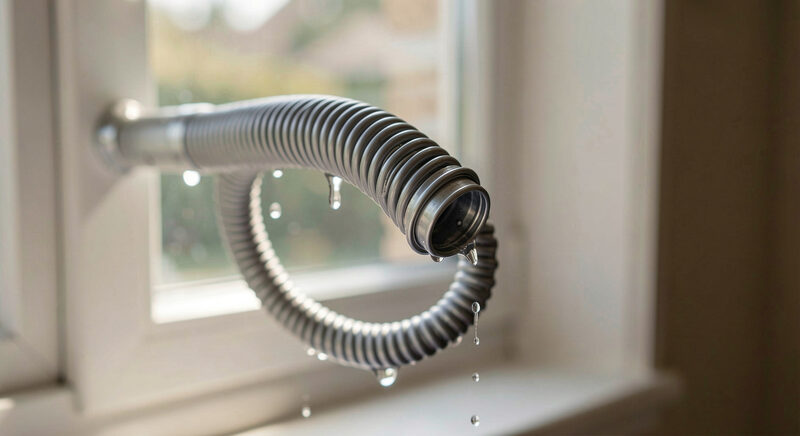
When a ventilator circuit is used with a heated humidifier, the gas leaving the chamber is warm and full of water vapour. As it travels down the inspiratory limb it cools, and once it drops below its dew point the vapour turns back into liquid on the tube wall. A heated wire breathing circuit is one answer to that problem: a fine wire runs through the tubing and warms it, so the gas stays above the dew point until it reaches the patient. This guide explains how the wire works, why condensation still happens, and what the bedside checks are.
How does a heated wire circuit reduce condensation?
The wire is embedded in or wrapped around the inspiratory limb and is warmed by the humidifier's control unit. By keeping the tube wall close to the temperature of the gas, it narrows the gap that causes vapour to condense. Modern heated humidifiers usually target a gas temperature near 37 degrees Celsius at the airway and use a temperature probe near the Y-piece to hold that set point as flows change. The wire does not add humidity; it protects the humidity already in the gas from being lost to the tube.
Why does condensation still form in a heated circuit?
Heat loss is not the only variable. The amount of water that can condense depends on how much vapour the gas carries and on how cold the surroundings are. A bench study of heated wire humidifiers measured the condensed mass in a circuit over seven hours of ventilation and found it rose with both minute volume and respiratory frequency, from about 3 grams at 1.5 litres per minute and 8 breaths per minute to about 9.4 grams at 8 litres per minute and 20 breaths per minute. That work, published in Physiological Measurement, showed that a single-point temperature control can leave real amounts of condensate in the tubing.
How much does room temperature change the picture?
A separate study on inspiratory limb condensation tested the same circuit at three room temperatures and weighed the tubing every two hours. At 23 degrees Celsius, condensate kept building throughout the run. At 25 degrees it built only in the first two hours and then stopped. At 27 degrees no condensation formed at all, even with the heater wire running as the manufacturer intended. The practical lesson is that a cold room, a draught or an air conditioning vent can undo a correctly set circuit, so the ward environment is part of the humidification plan.
Where should the water traps sit?
Even a well managed circuit will collect some liquid, and the lowest point of each limb is where it gathers. Traps placed at those points give the condensate a place to sit so it does not pool into a dependent loop and gurgle. The water traps guide covers single and double traps and how to empty them without breaking the circuit. On a heated wire circuit, the traps are checked at the same time as the temperature readout, because both are telling you how the humidification is behaving.
What does the clinician watch on a heated wire circuit?
The checks are short and repeatable. Read the temperature at the airway probe and compare it with the set point. Look along both limbs for visible water and feel for the dependent loops where it collects. Check that the trap is empty enough and firmly closed. Listen for a gurgle or a change in the sound of the circuit, which usually means water has moved. Watch the patient for signs of a blocked or partially occluded airway, because a large volume of condensate can be pushed towards the patient if a limb is lifted. None of these steps needs new equipment; they need the circuit to be looked at as a whole.
When is a heated wire circuit the wrong choice?
A heated wire circuit adds a power connection, a control unit and a probe to the bedside, and it needs a water supply and a humidifier chamber. Where those are not available, or for short procedures, a passive heat and moisture exchanger may be used instead. The HME filters guide explains how passive humidification recovers heat and moisture from the patient's own exhaled gas. The humidification guide compares the two approaches and the situations each suits.
Setting the temperature and the probe
Most heated wire systems hold a set gas temperature at the airway, commonly near 37 degrees Celsius, and use a probe close to the Y-piece to measure it. The probe position matters: placed too far from the patient, it reads a temperature that is not the one the patient receives, and the control unit compensates in the wrong direction. The probe and its cable are checked for damage at the start of use, and the cable is routed so it does not pull on the circuit. Some units also allow a gradient setting, so the temperature at the chamber is higher than at the airway, which reduces condensation in the limb. Whatever the setting, the aim is the same: gas that reaches the patient close to body temperature and fully saturated, without water pooling in the tubing on the way.
What to do at the start of the next shift
Treat the humidification setup as one system: chamber, wire, probe, traps and tubing. Confirm the set temperature, the probe position and the water level, then walk the limbs from the machine to the patient, emptying any trap that needs it. If condensate keeps returning in the same place, look for the reason, whether it is a cold spot, a low point or a setting that is too high for the flow. Recording what you found and what you changed gives the next clinician a starting point, and it turns a recurring gurgle into a problem that gets solved rather than managed.