Filters and Humidification
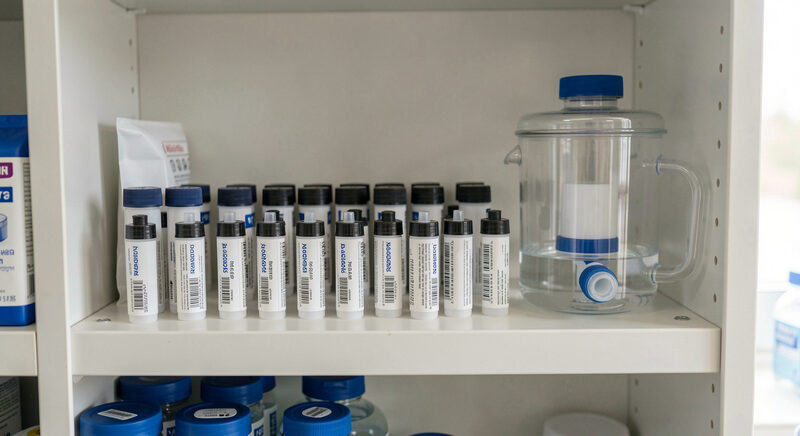
Gas delivered to an intubated patient has to be both clean and conditioned. The upper airway, which normally warms, humidifies and filters the air we breathe, is bypassed by the tube, so the breathing circuit has to take over part of that job. Two families of devices do it: filters, which remove particles from the gas, and humidifiers, which put heat and water back into it. This section gathers the guides on heat and moisture exchangers, bacterial and viral filters, and active humidification.
Why does an intubated patient need conditioned gas?
During normal breathing, the nose and upper airway warm the air to near body temperature, add water vapour and trap particles. An endotracheal or tracheostomy tube skips that route, so dry cold gas reaches the lower airway directly. If the gas is not conditioned, secretions thicken and can block the tube, and the airway lining is exposed to drying and cooling. The devices in this section exist to replace that lost function, either passively by recovering heat and moisture from the patient's own exhaled gas, or actively by adding heat and water from a humidifier.
What is the difference between a filter and a humidifier?
A filter removes particles from the gas, protecting the patient from what is in the circuit and protecting the machine from what the patient breathes out. A humidifier adds heat and moisture, protecting the airway from drying. The two functions are sometimes combined in one device. A heat and moisture exchanger, or HME, recovers warmth and water from exhaled gas and returns them on the next breath. Many HMEs also act as bacterial and viral filters, which is why they are often called HME filters. The HME filters guide covers the combined types in detail.
When is passive humidification enough?
Passive humidification with an HME suits short term ventilation, transport and many anaesthetic cases, where the device is light, needs no power or water and adds little to the bedside. It is less suited to long procedures and to patients who produce thick secretions or need high minute volumes, because its performance falls as tidal volume rises. The humidification guide compares passive and active methods and the situations each one fits, and explains why the choice is often about the patient and the length of ventilation rather than about one device being better in all cases. A patient who starts on one method may be moved to the other as secretions, minute volume or the length of ventilation change, so the decision is reviewed rather than fixed at intubation.
Where do the devices sit in the circuit?
An HME or filter usually sits between the Y-piece and the patient's airway, so it conditions and cleans the gas at the point closest to the patient. A heated humidifier works differently: the chamber sits on the inspiratory limb, where gas passes over heated water before travelling to the patient, and a heated wire may run down the limb to stop that water condensing out again. The ventilator breathing circuits guide describes how these components add dead space and resistance, and why the assembly is kept as short as the clinical need allows.
What standards apply to these devices?
Breathing circuit filters are judged on filtration efficiency and resistance to flow, tested under standards such as ISO 23328-1, which covers the filtration performance of breathing system filters. Heat and moisture exchangers are judged on how much moisture they return, tested under ISO 9360-1. Connectors on both follow ISO 5356-1. A manufacturer's stated figures, such as a bacterial filtration efficiency above 99.99 percent, come from bench tests under these standards rather than from clinical trials, which is why the test conditions matter as much as the headline number. A device that looks the strongest on a single figure can be the weaker choice once the tidal volume, the flow or the humidity of the local setup is taken into account.
How these devices are tested and labelled
Filters and humidifiers carry figures that come from laboratory tests rather than from clinical trials, and reading the label means reading the test conditions. A filter's filtration efficiency is measured with an aerosol of a stated particle size, and its resistance is measured at a stated flow. An HME's moisture output is measured at a stated tidal volume, which is why the same device can be described with different numbers in different documents. Standards such as ISO 23328 for filters and ISO 9360 for heat and moisture exchangers define how these tests are run, and a manufacturer's summary filed with a regulator usually names the standards it used. Comparing two devices on their headline numbers alone, without the conditions behind them, is how a purchase decision goes wrong.
What to check when choosing between them
Match the device to the patient and the plan. For a short case or a transfer, a combined HME filter keeps the assembly light and needs no water. For prolonged ventilation, high minute volumes or thick secretions, active humidification with a heated circuit is usually more reliable, and the bedside then includes a chamber, a probe and water traps to check. Whichever is chosen, confirm the connectors match, the device is the right size for the patient, and the position in the circuit is the one the manufacturer intends. The rest of this section takes each device in turn.
Filters and Humidification
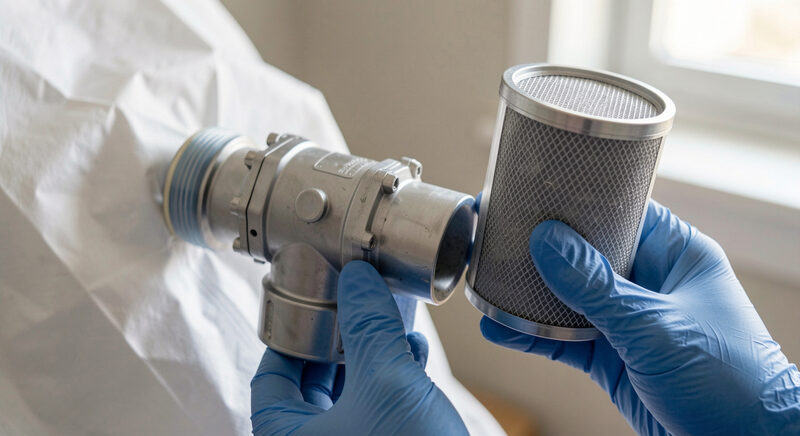
Heat and Moisture Exchanger Filters
How HME filters recover heat and moisture, the hygroscopic, hydrophobic and combined types, and how tidal volume changes their efficiency.
Passive humidification, and its limits at high tidal volume.
Filters and Humidification
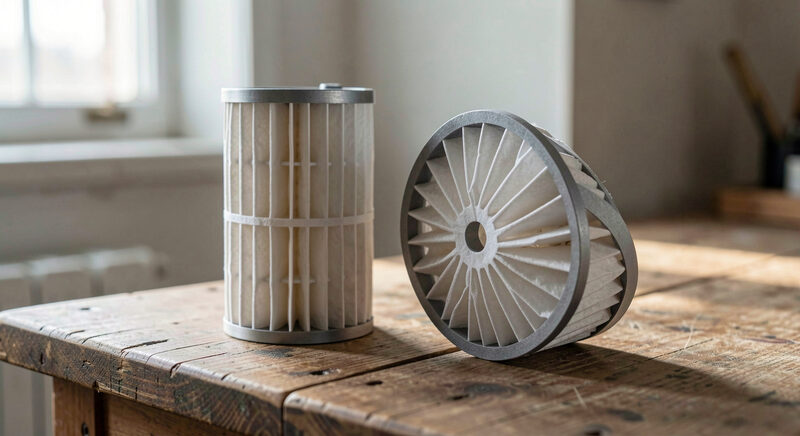
Bacteria and Viral Filters
What bacterial and viral filters capture in a breathing circuit, how electrostatic media work, and where filters sit to protect patient and machine.
What the filter captures, and where it sits to do it.
Filters and Humidification
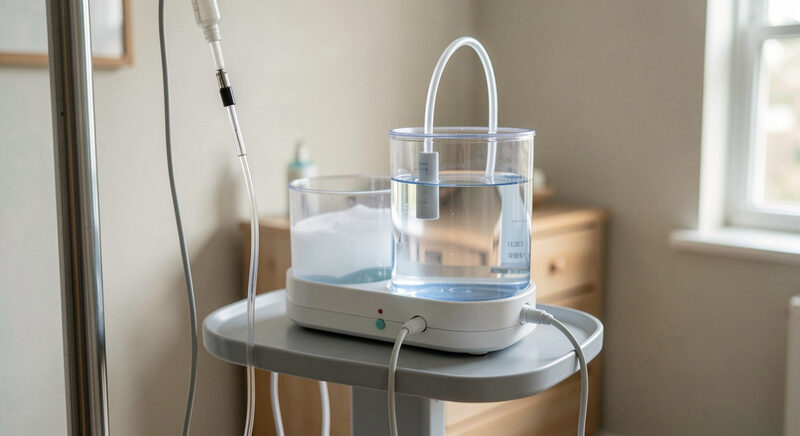
Humidification in Invasive Ventilation
Active heated humidification against passive HMEs: target temperature, condensation risk and the checks that keep inspired gas conditioned.
Active against passive, chosen per patient.