Bacteria and Viral Filters
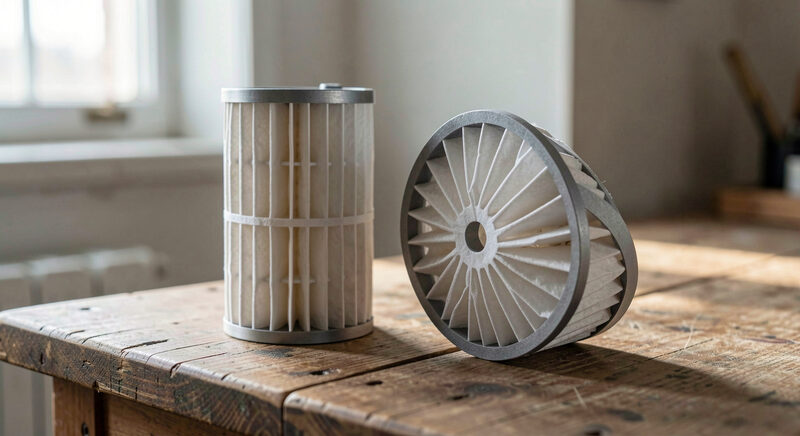
A bacteria and viral filter sits in the breathing circuit to remove particles from the gas, protecting the patient from what is in the machine and protecting the machine from what the patient breathes out. It is one of the least visible parts of a ventilator setup and one of the most consequential, because it stands between the airway and the equipment on both sides of the circuit. This guide explains how these filters capture particles, where they are placed and what the manufacturer's figures actually mean.
What does a breathing circuit filter remove?
The filter removes microbiological and particulate matter carried in the gas stream. During inspiration, it protects the patient from particles that may have collected in the circuit or the ventilator. During expiration, it protects the machine, the internal tubing and the next patient from what the current patient exhales. Some filters are placed on the inspiratory limb only, some on the expiratory limb only, and some at the Y-piece so that both directions pass through the same medium. The position is set by the manufacturer and by local policy, and it changes what the filter is protecting.
How does the filter media capture particles?
Many breathing circuit filters use an electrostatic polypropylene medium. Particles are captured by a combination of mechanical interception, where fibres catch a particle travelling past, and electrostatic attraction, where the charged medium pulls particles towards the fibres. The medium is pleated to give a large surface area in a small housing, which keeps resistance low while offering many fibre surfaces for particles to strike. A heat and moisture exchanger medium may sit in front of the filter, so the same device returns moisture and removes particles, as described in the HME filters guide.
What do the efficiency figures mean?
A manufacturer's filtration efficiency is a bench figure, measured with a test aerosol of a stated particle size. A typical combination HME filter, for example, is described in its regulatory summary as having a bacterial filtration efficiency above 99.99 percent for a mean particle size of 3.0 microns and a viral filtration efficiency above 99.99 percent for a mean particle size of 3.1 microns. That summary, filed with the US Food and Drug Administration, also states a moisture output measured at two tidal volumes. Reading the test conditions alongside the headline number tells you how the device performed, and at what size of particle and breath.
Where should a filter be placed?
Placement follows the job the filter is doing. A filter at the Y-piece, closest to the patient, conditions and cleans the gas at the point where both directions of flow pass through it. A filter on the expiratory limb protects the machine and its internal sensors from the patient's exhaled gas, and is common where the inspiratory gas is humidified by a heated chamber. In a heated circuit, a filter placed between the humidifier and the patient must not be so far from the humidifier that it dries out or blocks. The humidification guide explains how active humidification interacts with filters, and the ventilator breathing circuits guide describes the dead space each added device contributes.
How does a filter affect resistance and dead space?
Every device added to the circuit adds both dead space, the volume the patient rebreathes, and resistance to flow. A filter is no exception. The resistance depends on the medium, the pleating and the surface area, and it rises if the filter becomes wet or if secretions reach the medium. This matters most in small patients, where the dead space and resistance of a filter are a larger fraction of each breath. Choosing the correct size for the patient, and keeping the assembly as short as possible, is how the benefit of filtration is kept without adding avoidable work of breathing.
How long a filter is used
Breathing circuit filters are changed on a schedule set by the manufacturer and by local policy, not left in place until they look dirty. Over a long period of use a filter collects particles and can become wet, and a wet medium offers more resistance and can block. The change interval is written on the packaging and in the instructions, and it is tied to the conditions the filter was tested under. When a filter is replaced, the circuit is kept closed if possible, the new filter is seated fully, and the old one is disposed of as clinical waste. If a filter is changed earlier than scheduled because of rising airway pressure or visible contamination, that is recorded, because repeated early changes point to a problem upstream in the humidification or the secretions.
What to check when a filter is in use
Confirm the filter is the right size, correctly seated and placed where policy requires. Check that it is changed at the interval the manufacturer specifies, since a filter left in place too long collects more than particles. Watch for a rising airway pressure, a change in the sound of the circuit or increasing secretions, any of which can mean the medium is becoming loaded or wet. When you change the filter, look at the medium and note whether it is dry or contaminated, because that tells you whether the current placement and change interval are working or whether the setup needs to be reviewed.